

Last updated: June 17, 2026
Quick Answer
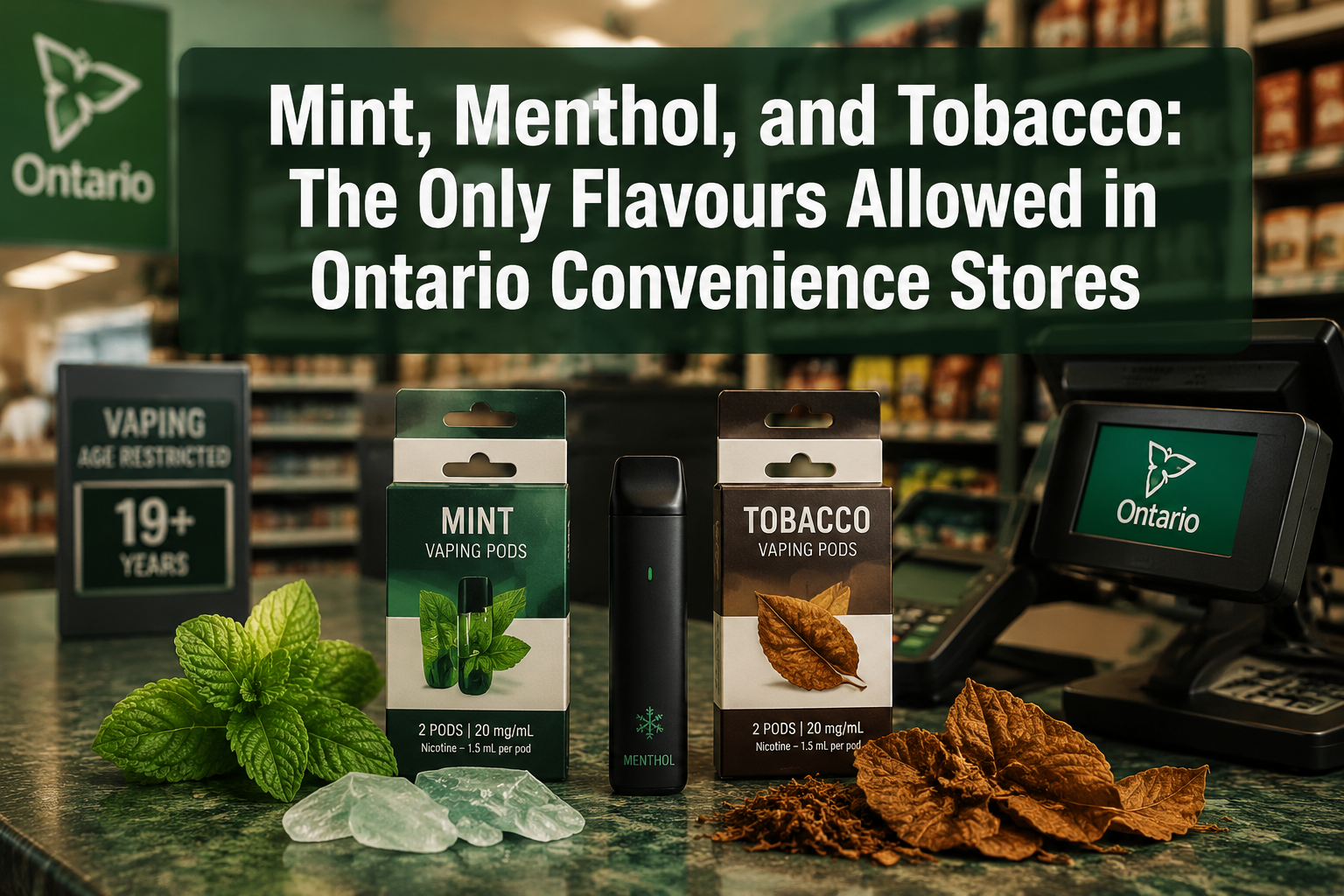
Ontario restricts convenience stores and gas stations to selling only mint, menthol, and tobacco-flavoured vape products. All other flavours, including fruit, candy, and dessert varieties, can only be purchased at specialty vape stores or licensed cannabis retail locations. This rule is part of the Smoke-Free Ontario Act, 2017, and it exists primarily to reduce youth vaping rates by removing the sweet, appealing flavours from the retail channels most accessible to young people.
Key Takeaways
- Convenience stores and gas stations in Ontario can only sell three vape flavour categories: mint, menthol, and tobacco.
- Fruit, candy, dessert, and other flavoured vapes remain legal but are restricted to specialty vape stores and licensed cannabis retailers.
- The Ontario government enacted these restrictions under the Smoke-Free Ontario Act, 2017, targeting youth appeal as the primary concern.
- Nicotine concentration in convenience store vapes is capped at 20 mg/mL; specialty stores may carry higher concentrations.
- Selling banned flavours at a convenience store can result in fines, licence suspension, or criminal charges.
- The flavour restriction applies regardless of the buyer’s age — even adults 19+ cannot buy fruit-flavoured vapes at a gas station.
- Online purchasing of flavoured vapes from Ontario-based retailers is permitted for adults 19+, though rules apply.
- Other Canadian provinces have taken varying approaches, from full flavour bans to no restrictions at all.
- No vape flavour is “healthier” than another — the flavouring itself does not change the nicotine content or core health risks.
- Retailers must keep vape products hidden from customer view until the point of sale and cannot allow handling before purchase.
Why Did Ontario Ban Other Vape Flavours in Convenience Stores?
Ontario restricted vape flavours in convenience stores because research consistently showed that sweet and fruity flavours were the primary driver of youth vaping uptake. The provincial government determined that limiting flavour options at the most accessible retail points — corner stores, gas stations, and grocery stores — would reduce the appeal of vaping to minors.
Before the restriction, convenience stores carried a wide range of flavoured vapes, from mango and watermelon to cotton candy and gummy bear. These flavours were especially popular among teens, who often cited taste as their main reason for trying vapes. By narrowing the selection to mint, menthol, and tobacco: the only flavours allowed in Ontario convenience stores, the province aimed to make these products less enticing to young, first-time users while still keeping options available for adult smokers using vapes as a cessation tool.
The logic is straightforward:
- Convenience stores are everywhere. They’re the most common retail outlet a teenager encounters daily.
- Specialty vape stores have stricter entry requirements. Many check ID at the door and cater to an older clientele.
- Tobacco and menthol flavours mimic traditional cigarettes, which are less appealing to youth who have never smoked.
For a broader look at all the rules that apply to vaping in the province, see our complete guide to vaping laws in Ontario for adults 19+.
When Did This Flavour Restriction Start in Ontario?
Ontario’s flavour restrictions for convenience stores took effect as part of regulatory updates under the Smoke-Free Ontario Act, 2017. The Act itself was passed in 2017 to replace the older Smoke-Free Ontario Act of 2006, but the specific flavour sale restrictions were phased in through subsequent regulations over the following years.
The key timeline:
| Year | What Happened |
|---|---|
| 2017 | Smoke-Free Ontario Act, 2017 passed into law |
| 2020 | Ontario introduced regulations restricting flavoured vape sales in non-specialty retail |
| 2020-2021 | Enforcement ramped up; convenience stores required to remove non-compliant products |
| 2026 | Rules remain in effect with ongoing enforcement by local public health units |
The restrictions were not a sudden overnight change. Retailers were given notice and transition periods to clear non-compliant inventory. Today, the rule is well established and actively enforced across the province.
Who Made the Decision to Limit Vape Flavours?
The Ontario provincial government, through the Ministry of Health, made the decision. The restrictions were enacted as regulations under the Smoke-Free Ontario Act, 2017. This means they were created by the provincial cabinet (the Lieutenant Governor in Council) rather than requiring a separate vote in the Ontario Legislature for each specific rule.
Public health units across Ontario are responsible for enforcement at the local level. They conduct inspections, respond to complaints, and issue penalties when retailers violate the rules. The federal government also plays a role through Health Canada, which regulates product standards like nicotine caps, but the flavour-by-retail-channel restriction is a provincial decision.
What’s the Difference Between Mint and Menthol Vapes?
Mint and menthol vapes taste similar but use different flavouring compounds. Menthol is a specific chemical compound (naturally found in peppermint oil or synthetically produced) that creates a cooling sensation in the throat and airways. Mint flavouring is broader — it can include spearmint, peppermint, wintergreen, or blended mint profiles that may or may not contain significant menthol.
Here’s a quick comparison:
| Feature | Mint Vapes | Menthol Vapes |
|---|---|---|
| Primary flavour | Fresh, herbal, sometimes sweet | Cool, sharp, medicinal |
| Cooling sensation | Mild to moderate | Strong |
| Throat hit | Softer | More pronounced |
| Closest cigarette equivalent | Mint-flavoured tobacco | Menthol cigarettes |
| Common preference | Vapers who want a lighter cool taste | Former menthol cigarette smokers |
Both are permitted in convenience stores under Ontario’s rules. The distinction matters for personal preference, but legally they’re treated as separate allowed categories alongside tobacco flavour.
If you’re new to choosing between vape options, our guide on how to choose the right disposable vape covers flavour selection and other factors.
Can You Still Buy Flavoured Vapes Online in Ontario?
Yes, adults aged 19 and older can purchase flavoured vapes online from Ontario-based retailers. The convenience store flavour restriction applies specifically to physical retail locations that are not specialty vape stores. Online vape retailers operating legally in Ontario can sell a full range of flavours, including fruit, dessert, and candy options, provided they comply with age verification requirements and other federal and provincial rules.
Key points about buying flavoured vapes online:
- Age verification is mandatory. Legitimate online retailers must verify the buyer is 19+ before completing a sale.
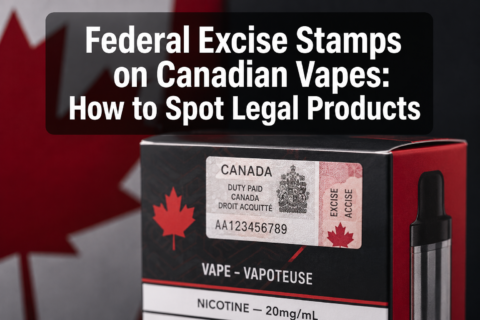
- Federal excise stamps still apply. Legal vape products sold in Canada must carry the proper federal excise stamp — this is true for both in-store and online purchases.
- Nicotine caps apply. The 20 mg/mL nicotine limit applies to products sold outside specialty vape stores, including most online sales.
- Shipping restrictions may apply. Some carriers have policies about shipping vape products, so delivery timelines can vary.
Common mistake: Assuming that because a website ships to Ontario, it’s operating legally. Always check for proper excise stamps on the product and confirm the retailer follows Canadian regulations. For more on nicotine limits, read about the 20 mg/mL nicotine cap and what it means for vapers.
Are Tobacco Flavours Healthier Than Other Vape Flavours?
No. No vape flavour is inherently healthier than another. The flavouring in a vape does not meaningfully change the core health risks associated with inhaling nicotine-containing aerosol. Tobacco-flavoured, mint-flavoured, and fruit-flavoured vapes all deliver nicotine through a similar mechanism, and the base ingredients (propylene glycol, vegetable glycerin, nicotine, and flavourings) carry similar risks regardless of the taste.
The reason Ontario allows only mint, menthol, and tobacco in convenience stores is not because these flavours are safer. It’s because they are less appealing to youth. The health rationale is about reducing initiation, not about the chemical safety of specific flavourings.
That said, some research has raised questions about whether certain flavouring chemicals (like diacetyl, found in some butter and dessert flavours) may pose additional respiratory risks. But this is about specific chemical additives, not about whether “tobacco flavour” is safer than “strawberry flavour” as a category.
Bottom line: Choose a flavour based on personal preference and cessation goals, not based on a belief that one flavour is healthier.
How Much Do Menthol Cigarettes Cost in Ontario?
Menthol cigarettes in Ontario typically cost between $16 and $20+ per pack of 20-25 cigarettes as of 2026, depending on the brand and retailer. Ontario has some of the highest tobacco taxes in Canada, which drives up the price significantly.
For context, this pricing is relevant because many adult smokers compare the cost of cigarettes to vaping. A single disposable vape device, which can last several days to a week depending on usage, often costs less than a pack of cigarettes. For adults looking at budget-friendly alternatives, our roundup of affordable disposable vapes in Ontario under $20 provides a useful comparison.
Note: Menthol cigarettes are still legal for sale in Ontario, unlike in some other jurisdictions that have banned menthol cigarettes entirely. However, all cigarettes must be sold from behind-the-counter displays and cannot be visible to customers.
What Happens If a Store Sells Banned Vape Flavours?
Convenience stores caught selling flavours other than mint, menthol, or tobacco face serious consequences. Local public health inspectors enforce these rules, and penalties can include:
- Fines for the individual who made the sale and for the business owner
- Suspension or revocation of the retailer’s tobacco/vape sales licence
- Repeat offence escalation, with higher fines and longer suspensions for subsequent violations
- Potential criminal charges under the Smoke-Free Ontario Act for serious or repeated non-compliance
Public health units conduct both routine inspections and complaint-driven investigations. They may also use underage test shoppers (compliance checks) to verify that stores are following age and product rules.
Edge case: If a convenience store owner also operates a specialty vape store at a separate location, the flavour rules apply per location. The convenience store is still limited to mint, menthol, and tobacco, even if the owner’s other store can sell the full range.
For retailers looking to stay compliant while maximizing their product offerings, understanding wholesale vape supplier selection can help ensure the products on your shelves meet all provincial requirements.
Do These Flavour Restrictions Apply to All Age Groups?
Yes. The flavour restriction is a retail-channel rule, not an age-based rule. It applies to the store, not the customer. Even a 45-year-old adult cannot walk into an Ontario convenience store and buy a mango-flavoured vape. The store simply isn’t allowed to stock it.
Here’s how the rules break down:
| Rule | Who It Applies To |
|---|---|
| Flavour restriction (mint/menthol/tobacco only) | The retail location (convenience stores, gas stations) |
| Age restriction (19+) | The buyer — no one under 19 can purchase any vape product anywhere |
| Nicotine cap (20 mg/mL) | Non-specialty retail locations |
| Display restrictions | All retailers — products must be hidden until point of sale |
The age restriction and the flavour restriction work together but are separate rules. An adult who wants fruit-flavoured vapes must go to a specialty vape store, a licensed cannabis retailer, or purchase online.
For a full breakdown of where vaping is and isn’t permitted, including the 9-metre rule for public spaces, see where you can and cannot vape in Ontario.
Are There Ways to Get Around the Flavour Ban?
The flavour restriction is not a total ban — it’s a channel restriction. Adults 19+ have several legal ways to access the full range of vape flavours:
- Visit a specialty vape store. These shops can sell all flavours and higher nicotine concentrations. They’re specifically licensed for this purpose.
- Shop at a licensed cannabis retail store. These retailers are also permitted to carry a broader flavour range.
- Buy online from a legal Canadian retailer. Online shops can sell flavoured vapes to verified adults 19+.
What’s not legal:
- Buying from unlicensed or black-market sources
- Having someone purchase restricted products on behalf of a minor
- Retailers disguising flavoured products as mint or tobacco when they aren’t
Common mistake: Some consumers assume that because a product is labelled “ice” or “cool,” it qualifies as mint or menthol. In reality, enforcement looks at the actual flavour profile, not just the branding. A “watermelon ice” vape is still a fruit-flavoured product, even though it has a cooling element.
How Do Other Canadian Provinces Handle Vape Flavours?
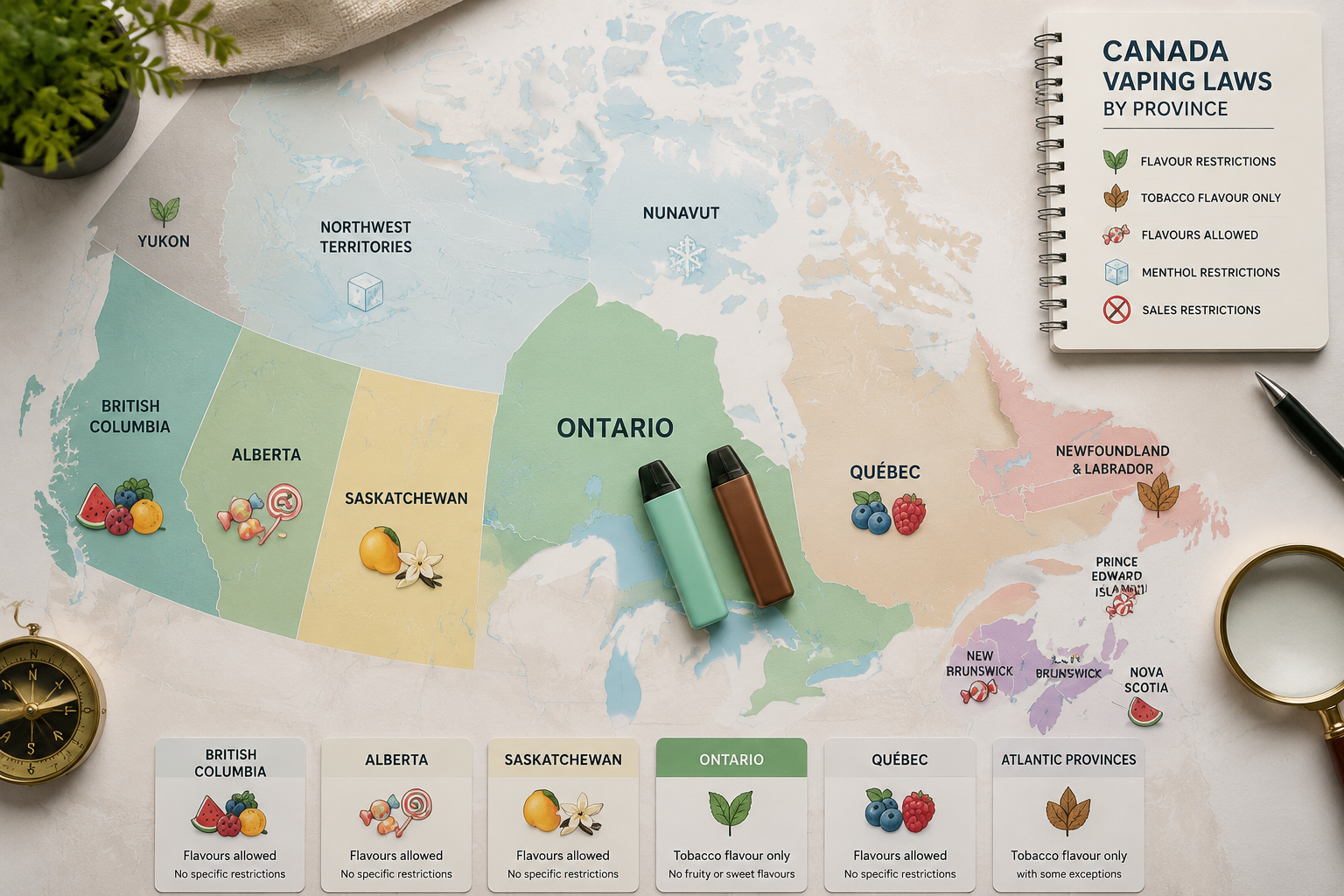
Ontario is not alone in restricting vape flavours, but each province takes a different approach. Here’s a comparison of how major provinces handle the issue as of 2026:
| Province | Flavour Rules |
|---|---|
| Ontario | Mint, menthol, and tobacco only in convenience stores; full range at specialty stores |
| British Columbia | Restricted flavoured vapes to age-restricted stores; similar approach to Ontario |
| Quebec | Banned all flavoured vapes (including mint and menthol) in all retail channels |
| Nova Scotia | Banned all flavoured vapes province-wide |
| Alberta | No provincial flavour restrictions beyond federal rules |
| Saskatchewan | No specific provincial flavour ban |
| Prince Edward Island | Banned flavoured vapes |
Quebec and Nova Scotia have taken the strictest approach, banning all flavoured vapes entirely. Alberta and Saskatchewan have been more permissive, relying on federal rules. Ontario’s approach sits in the middle — restricting flavours by retail channel rather than banning them outright.
Decision rule: If you’re travelling between provinces, don’t assume the rules are the same. A product that’s legal to buy at a convenience store in Alberta may only be available at a specialty store in Ontario, and may be completely unavailable in Quebec.
What Do Teens Think About the Mint and Menthol Only Rule?
Survey data and public health reports suggest that flavour restrictions have had a measurable impact on teen vaping behaviour, though the picture is mixed. Many teens report that the removal of fruit and candy flavours from convenience stores made vaping less appealing. However, some teens simply shifted to other sources — buying from specialty stores (if they could pass age checks), obtaining products from older friends, or turning to the black market.
Key observations from public health reporting:
- Reduced casual experimentation. Teens who might have impulsively tried a sweet-flavoured vape at a corner store are less likely to do so when only tobacco and menthol are available.
- Social influence persists. Teens who are determined to vape often find ways to access flavoured products through social networks.
- Mint and menthol still appeal to some youth. These flavours aren’t completely unappealing to young people — they’re just less attractive than mango or cotton candy.
- The restriction works best as part of a broader strategy that includes age verification enforcement, education, and penalties for retailers who sell to minors.
The consensus among public health experts is that flavour restrictions alone don’t eliminate youth vaping, but they meaningfully reduce the on-ramp. When combined with strict age verification (Ontario requires ID checks for anyone who appears under 25), the policy creates multiple barriers.
Understanding the Full Retail Rules for Mint, Menthol, and Tobacco: The Only Flavours Allowed in Ontario Convenience Stores
Beyond flavour restrictions, Ontario imposes several other rules on convenience stores that sell vape products. Understanding the full picture helps both retailers and consumers stay compliant.
Display and Handling Rules
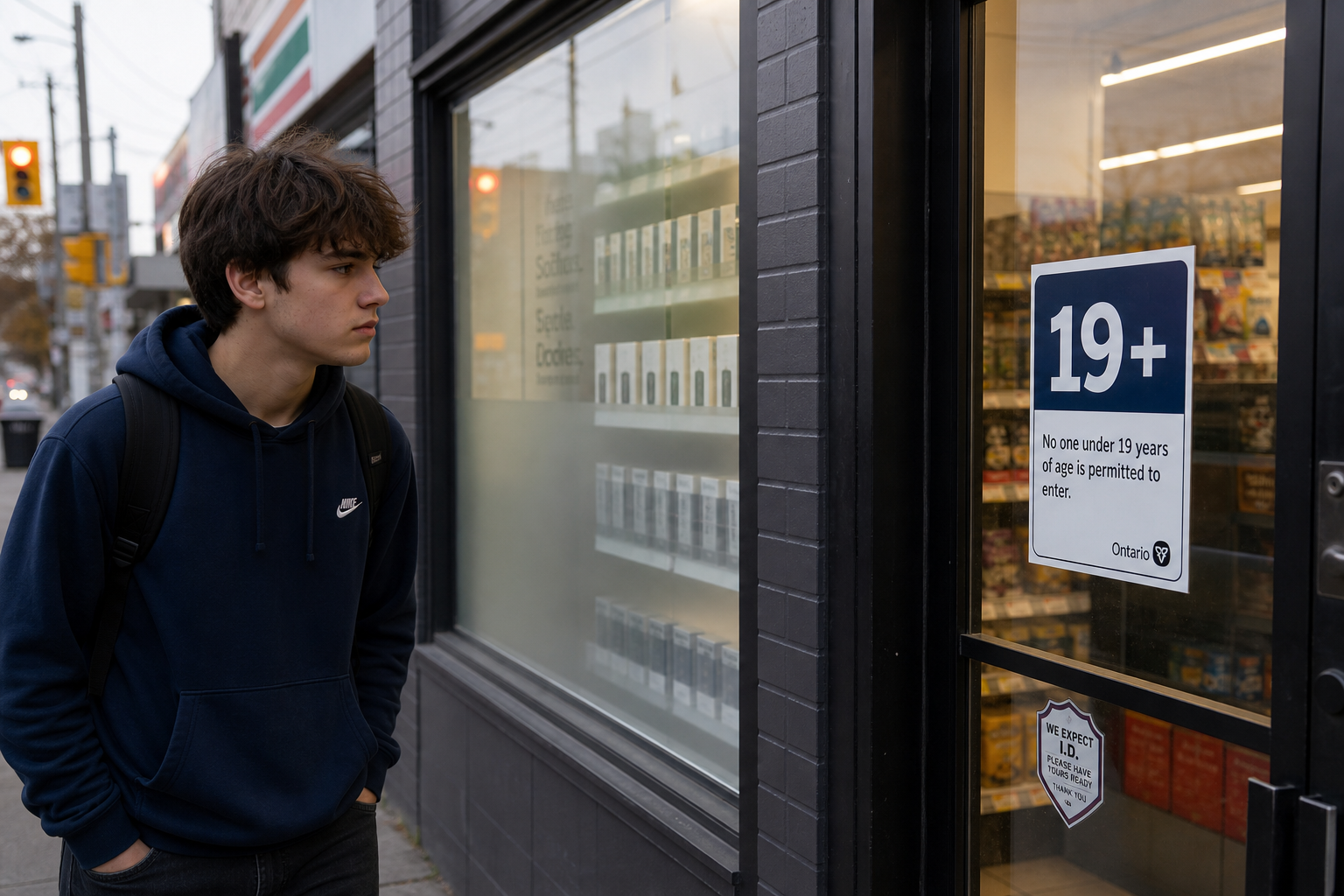
- Vape products must be hidden from customer view until the point of sale. This means no open shelving, no countertop displays, and no product visible through windows.
- Customers cannot handle products before purchase. Unlike picking up a chocolate bar, a customer can’t hold or examine a vape device before buying it.
- Signage is mandatory. Stores must display government-approved signs about age restrictions. These signs are available from local public health units.
Nicotine Concentration Limits
Convenience stores are limited to selling vapes with a maximum nicotine concentration of 20 mg/mL. Specialty vape stores can sell higher concentrations. This rule works alongside the flavour restriction to limit the potency of products available at the most accessible retail points.
Who Can Sell Vapes
Not every convenience store automatically qualifies to sell vape products. Retailers must comply with all provisions of the Smoke-Free Ontario Act, 2017, and can lose their ability to sell these products if they violate the rules.
For those interested in the wholesale side of the business, our guide on selling wholesale disposable vapes in Canada covers the legal and practical requirements.
Specialty Vape Stores vs. Convenience Stores: What’s the Difference?
The distinction between these two retail channels is central to understanding why mint, menthol, and tobacco are the only flavours allowed in Ontario convenience stores while other flavours remain available elsewhere.
| Feature | Convenience Store | Specialty Vape Store |
|---|---|---|
| Allowed flavours | Mint, menthol, tobacco only | All flavours |
| Max nicotine | 20 mg/mL | Higher concentrations permitted |
| Product display | Must be hidden from view | Indoor displays allowed (not visible from outside) |
| Primary customer base | General public, all ages enter | Typically adults; many check ID at entry |
| Product range | Limited vape selection alongside other goods | Dedicated vape inventory with expert staff |
| Promotion | No promotion of vape products allowed | Indoor promotion permitted (not visible from outside) |
Specialty vape stores exist specifically to serve adult vapers. Because their customer base skews older and more intentional, the province allows them broader product access. The trade-off is stricter rules about keeping their displays and promotions invisible from the street.
Frequently Asked Questions
Can I buy fruit-flavoured vapes at any store in Ontario?
No. Fruit-flavoured vapes are only available at specialty vape stores, licensed cannabis retail stores, and through legal online retailers. Convenience stores and gas stations are limited to mint, menthol, and tobacco flavours.
Is menthol the same as mint in Ontario’s vape rules?
They are listed as separate permitted categories. Menthol refers to the specific cooling compound, while mint covers a broader range of mint-family flavours like spearmint and peppermint. Both are allowed in convenience stores.
What age do I need to be to buy vapes in Ontario?
You must be at least 19 years old. Retailers are required to ask for ID from anyone who appears to be under 25.
Are these rules part of federal or provincial law?
The flavour-by-retail-channel restriction is provincial, enacted under the Smoke-Free Ontario Act, 2017. Federal rules from Health Canada cover product standards like nicotine limits and excise stamps.
Can a convenience store sell nicotine-free flavoured vapes?
The flavour restriction applies to all vapour products sold in convenience stores, regardless of whether they contain nicotine. A nicotine-free strawberry vape is still not permitted at a convenience store.
Do the rules apply to refillable vape devices or just disposables?
The rules apply to all vapour products, including disposable vapes, refillable devices, and e-liquid bottles. The flavour restriction is about the product, not the device type.
How can I report a store selling banned flavours?
Contact your local public health unit. They handle enforcement of the Smoke-Free Ontario Act and will investigate complaints about non-compliant retailers.
Are there any exceptions for Indigenous-owned stores?
Tobacco and vape product rules on First Nations reserves can differ because of jurisdictional considerations. The Smoke-Free Ontario Act’s application may vary depending on the specific legal context of the retail location.
Will Ontario ever ban mint and menthol too?
There’s no current indication that Ontario plans to ban mint and menthol flavours in convenience stores. However, Quebec and Nova Scotia have already banned all flavoured vapes, so it’s a possibility that advocacy groups continue to push for.
Can I bring flavoured vapes into Ontario from another province?
Personal possession of legal vape products for personal use is generally not restricted. However, reselling products that don’t comply with Ontario’s retail rules is illegal.
Do these rules affect tobacco cigarettes too?
Tobacco cigarettes have their own set of restrictions under the same Act, including display bans and flavour restrictions (menthol cigarettes remain legal in Ontario, unlike in some other jurisdictions). The vape flavour rules are separate from cigarette regulations.
Where can I learn more about Ontario’s vaping rules?
For a comprehensive overview, visit our complete guide to vaping laws in Ontario or check the Ontario government’s official page on rules for selling tobacco and vapour products.
Conclusion
Ontario’s decision to limit convenience stores to mint, menthol, and tobacco flavours represents a targeted public health strategy. Rather than banning flavoured vapes entirely, the province chose to restrict where they can be sold — keeping the most youth-appealing options out of the most youth-accessible stores.
Here’s what to do with this information:
- If you’re an adult vaper who prefers fruit or dessert flavours, shop at a specialty vape store or purchase online from a legal retailer. The flavours you want are still available — just not at the corner store.
- If you’re a convenience store owner, make sure your vape inventory includes only mint, menthol, and tobacco options, with nicotine concentrations at or below 20 mg/mL. Keep products hidden from view and display the required age-restriction signage.
- If you’re a parent or educator, understand that the flavour restriction is one layer of protection. Combine it with conversations about nicotine risks and awareness of how teens might access products through other channels.
- If you’re considering the wholesale side, ensure your supplier provides only compliant products for your retail channel. Our guide on choosing the best wholesale vape supplier in Ontario can help you ask the right questions.
The rules around mint, menthol, and tobacco as the only flavours allowed in Ontario convenience stores are clear, enforceable, and unlikely to be relaxed anytime soon. Staying informed and compliant protects both public health and your business.